

Last Updated: November 6, 2026
Quick Summary
The best luxury skincare for reactive skin is fragrance-free, low in potential irritants, and built around barrier-supporting ingredients such as ceramides, hyaluronic acid and aloe. Look for dermatological testing claims and a short ingredient list, then patch test before committing.
- Reactive skin flares to a specific trigger, while sensitive skin is a broader tendency toward dryness and stinging.
- Fragrance is the single most common culprit, and natural essential oil fragrance is no safer.
- Patch test for three days on the inner forearm, then another three beside the jaw.
- Add one new product every two weeks so you can trace a reaction to its source.
- A routine for reactive skin needs four steps, not ten: cleanse, hydrate, treat and protect.
Table of Contents
- What Makes Luxury Skincare Suitable for Reactive Skin?
- Best Skincare Ingredients for Sensitive Skin
- Skincare Ingredients to Avoid for Reactive Skin
- How to Patch Test Skincare Before You Commit
- Building a Skincare Routine for Reactive Skin
- Frequently Asked Questions
What Makes Luxury Skincare Suitable for Reactive Skin?
The best luxury skincare for reactive skin is formulated to calm rather than stimulate: fragrance-free, low in potential irritants, and built around barrier-supporting ingredients like ceramides, hyaluronic acid and soothing plant extracts. Judge a premium formula by what it leaves out as much as what it puts in.
Reactive skin flares in response to a specific trigger, a fragrance, essential oil or strong active, while sensitive skin is a broader tendency toward dryness, tightness and stinging. A reactive complexion needs a short ingredient list and a careful introduction schedule.
Best Skincare Ingredients for Sensitive Skin
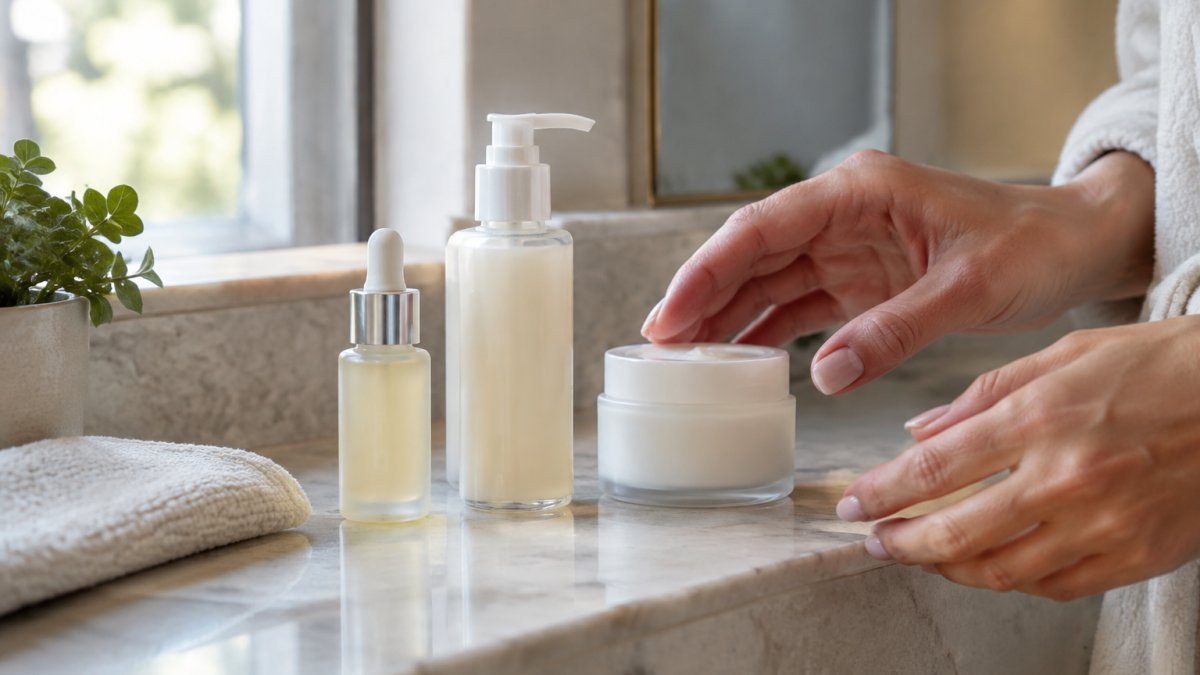
Ingredients commonly associated with supporting hydration and the skin barrier include ceramides, hyaluronic acid, glycerin, aloe, sodium PCA and prebiotic ferments.
A gentle cleanser matters more than most people expect. An oil-to-milk formula lifts makeup without stripping the barrier, so we favour cream or oil cleansers over foaming gels. The Sensitive Skin Oil-To-Milk Cleanser is dermatologically tested and is formulated for sensitive and dehydrated skin.

Barrier support is the second pillar. Ceramide-related lipids help hold the skin together, and a night cream built around them suits a compromised barrier. The Ceramide Barrier Night Cream pairs those lipids with cocoa and shea butter and is suited to normal and dry skin.
| Ingredient | What It Does | Best For | Watch Out For |
|---|---|---|---|
| Ceramides | Supports the skin barrier | Compromised, dry skin | None for most people |
| Hyaluronic acid | Draws in and holds hydration | Dehydration, tightness | Needs a cream on top |
| Aloe juice | Calms and soothes | Redness, irritation | Check for added fragrance |
| Sodium PCA | Helps skin retain moisture | Dry, reactive skin | Usually well tolerated |
| Prebiotic ferments | Supports skin balance | Barrier health | Introduce slowly |
| Niacinamide | Evens tone, supports barrier | Dullness, uneven tone | High percentages can sting |
Skincare Ingredients to Avoid for Reactive Skin
The ingredients most likely to trigger a reaction are fragrance, essential oils, drying alcohols, strong acids and high-strength retinoids. Fragrance is the single most common culprit, and "natural" fragrance from essential oils is no safer.
Watch out: "dermatologically tested" is not the same as fragrance-free. Read the full ingredient list, not the front of the jar.
- Added fragrance and parfum: the most frequent cause of contact reactions
- Essential oils such as lavender, citrus and peppermint: natural, but still potential irritants
- Denatured alcohol: gives a light feel but can leave skin drier
- Strong acids and retinoids: useful, but introduce them one at a time
- Physical scrubs: abrasive particles can aggravate redness
For an overnight option, the Velvet Calm Overnight Cream is fragrance-free and built around aloe vera juice and hyaluronic acid to help reduce the look of visible redness and irritation by morning.

How to Patch Test Skincare Before You Commit
A patch test takes three days on the inner forearm or beside the jaw, not the cheek. Apply a small amount twice daily and stop immediately if itching, stinging or redness appears.
Velvet Calm Fragrance-Free Cream →
- Clean and dry a small patch on the inner forearm.
- Apply a pea-sized amount and let it absorb.
- Repeat morning and evening for three days.
- Note any tingling, redness or bumps, and photograph the patch in daylight.
- If clear, move to a small area beside the jaw for another three days.
- Then introduce the product to your full routine, one new item at a time.
Gradual introduction is the part most people skip. Add one product every two weeks so you can trace a reaction to its source. A fragrance-free body wash is an easy starting point: the Patchouli Amber Vanilla Hand Body Wash works well.
Building a Skincare Routine for Reactive Skin
A routine for reactive skin needs four steps, not ten: cleanse, hydrate, treat and protect. Every extra product is another chance for a reaction.
Start with a gentle cleanser morning and evening, follow with a hydrating mist or toner, then a barrier cream suited to your skin type. Add a serum only once the basics feel stable, and finish every morning with mineral sun protection.
For daytime hydration, the Velvet Calm Fragrance-Free Cream uses aloe juice, hyaluronic acid and sodium PCA to hydrate and is formulated to reduce redness and irritation. For drier skin, the richer Velvet Nectar Rich Cream adds cocoa and shea butter.

The Exosome Renewal Elixir combines niacinamide, lactic acid and centella asiatica in a fragrance-free, vegan formula suitable for all skin types, including sensitive. Introduce it every third night at first.
Best for: reactive skin that flares with fragrance or strong actives. Skip if: your skin is currently broken or irritated; calm it first, then introduce.
Frequently Asked Questions
What is the best luxury skincare for reactive skin?
Start with a short routine built on fragrance-free formulas. A gentle oil-to-milk cleanser lifts makeup without stripping moisture, a barrier cream with aloe juice, hyaluronic acid and sodium PCA calms redness, and a prebiotic serum supports the skin barrier. Get Pure Nirvana's Velvet Calm range includes a fragrance-free cream at £36.99 and an oil-to-milk cleanser at £34.99. Add one product at a time and give each two weeks before the next.
How do I patch test skincare on reactive skin?
Apply a small amount to the inner forearm or behind the ear and leave it for 24 to 48 hours. If there is no redness, itching or swelling, try it on a small patch of jawline for another two days before using it across the face. Introduce one new product at a time so you can tell which formula caused a reaction. Keep your receipt in case you need it.
Are fragrance-free products better for reactive skin?
Yes, for most reactive skin. Added fragrance and essential oils are among the most common triggers of contact irritation, and the term fragrance-free means no scent has been added rather than that the formula smells of nothing. Look for that wording on the label rather than 'unscented', which can still contain masking fragrance. Get Pure Nirvana's Velvet Calm creams, the Exosome Renewal Elixir and the Aqua Bloom Tonique are all listed as fragrance free.
Reactive skin rewards patience more than it rewards spending. Our advice is to start with a fragrance-free cleanser and one calming cream, test them properly, and only then add a serum. Get Pure Nirvana formulates with ceramides, hyaluronic acid and soothing plant extracts, ships across the UK, US and EU, and keeps every formula fragrance-free where it matters most. Find your ritual and build a routine your skin can actually tolerate.



Leave a comment
This site is protected by hCaptcha and the hCaptcha Privacy Policy and Terms of Service apply.