
Quick Summary
Peptide skincare can be worth it as a supporting step, mainly for hydration and gradual firmness, but its evidence varies widely by peptide type. Well-studied peptides like copper tripeptide-1 and Matrixyl show modest results over eight to twelve weeks, while sunscreen and retinoids remain better-established priorities.
- Copper tripeptide-1 has the longest research history among carrier peptides, though its trials are small and short.
- Palmitoyl pentapeptide-4 showed modest fine-line improvements over eight to twelve weeks in small clinical studies.
- Check whether a named peptide appears high in the ingredient list, not after preservatives and fragrance.
- Hydration usually improves within days, while firmness and fine-line changes build gradually over months.
- Use one peptide product consistently for eight to twelve weeks before judging whether it works.
Table of Contents
- What Peptides Are and How They Work in Skincare
- Peptides in Skincare Benefits: What the Evidence Shows
- How Strong the Evidence Is, by Peptide Type and Formulation
- How to Read a Peptide Product Label
- Peptide Serum: How to Use It in a Realistic Routine
- Peptides and Vitamin C Together: Compatibility and Layering
- How Long Peptides Take to Work and What Results to Expect
- Is Peptide Skincare Worth the Money, and Where to Start
- Frequently Asked Questions
What Peptides Are and How They Work in Skincare
Peptides are short chains of amino acids, the same building blocks that make up collagen and elastin. In skincare, they are included because they may send signals to skin cells that encourage repair and firmer-looking texture. Several of our formulas include peptides, so this is the ingredient family behind our range.
Signal, carrier and enzyme-inhibiting peptides explained
Not all peptides do the same job. Signal peptides are thought to prompt the skin to produce more collagen. Carrier peptides are designed to deliver trace minerals such as copper to the skin. Enzyme-inhibiting peptides are formulated to slow the enzymes that break down collagen. Knowing which type a product uses helps you judge what it might realistically do.
Peptides in Skincare Benefits: What the Evidence Shows
The most common claims for peptide skincare centre on firmness, smoothness and hydration. Some of these claims are supported by early research, but many rest on small studies or on the ingredient's theoretical action. Read these benefits as possibilities rather than guarantees.
Collagen, elastin and firmness
Peptides are widely marketed for supporting collagen and elastin, the proteins that give skin its structure and bounce. Laboratory and small clinical work suggests some peptides may encourage these proteins, but results in everyday use tend to be modest. Expect a gradual change in how skin looks, not a dramatic lift.
Wrinkles, fine lines and hydration
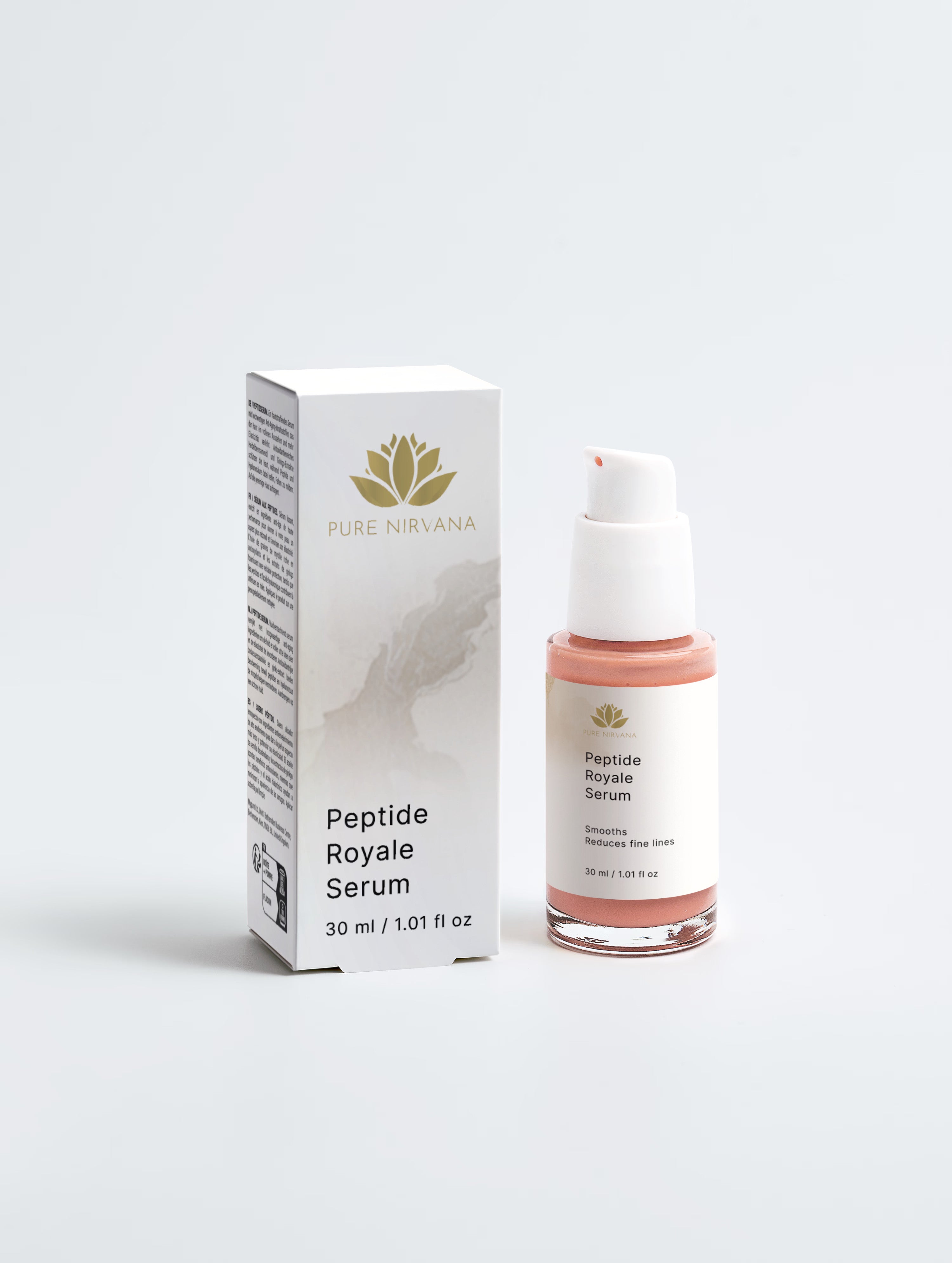
Peptides are often paired with humectants such as hyaluronic acid to address fine lines and dehydration. The hydration effect is usually the most noticeable and the quickest to appear, while any reduction in wrinkles builds up over months of consistent use. Our Peptide Royale Serum combines peptides with hyaluronic acid.
How Strong the Evidence Is, by Peptide Type and Formulation
Evidence for peptides is not one body of proof, it is a patchwork that varies by peptide class, by the concentration tested, and by whether the finished product was studied at all. Most published work falls into three tiers, and knowing which tier a claim sits in is the single most useful filter for judging whether a product is worth buying.
Tier one: peptides with the most human data
Copper tripeptide-1 (often listed as GHK-Cu) has the longest research history of the carrier peptides. Laboratory work and small human studies suggest it may support collagen production and wound healing, but many trials have been small, short, or conducted in settings that do not mirror daily cosmetic use. Palmitoyl pentapeptide-4 (marketed as Matrixyl) and palmitoyl oligopeptide have small clinical studies behind them, typically showing modest improvements in the appearance of fine lines over eight to twelve weeks when used at the concentrations tested. These are the peptides where a cautious, qualified claim is defensible.
Tier two: plausible mechanism, thin human evidence
Many signal peptides, including various palmitoyl- and acetyl-linked sequences, have credible laboratory data showing they can influence collagen-related pathways in skin cells. What is usually missing is independent human trial data on the finished formula at the concentration sold. A common pattern is a single manufacturer-funded study on the raw ingredient, not the product in the bottle. That does not make the peptide useless, but it means the marketing claim often outruns the published evidence.
Tier three: marketing-led inclusions
Some products name a peptide that appears after preservatives and fragrance in the ingredient list, or use a trademarked blend without disclosing concentration. Where a peptide is present at a fraction of a percent, the theoretical mechanism may not translate into a visible effect. Treat these as supporting ingredients rather than the reason to buy.
The limits of the evidence base
Three limitations matter when you read any peptide claim. First, study size: many trials involve a few dozen participants, which makes small differences hard to distinguish from noise. Second, formulation: a peptide that performed well in one vehicle may behave differently in another, so results do not automatically transfer between products. Third, outcome measurement: studies often rely on subjective grading or instrumental measures that do not map neatly onto what you see in the mirror. Gradual, modest change is a more realistic expectation from the better-studied peptides than dramatic claims of lifting, filling or reversing.
Watch out: a brand citing "clinical studies" may be referring to unpublished manufacturer data on a raw material rather than an independent trial of the product you are buying.
The evidence for peptides varies by type, so this table sets out which peptides have the most human data and how far each claim can be trusted.
| Peptide tier | Examples named | Strength of evidence |
|---|---|---|
| Tier one | Copper tripeptide-1 (GHK-Cu) | Longest research history; small, short trials |
| Tier one | Palmitoyl pentapeptide-4 (Matrixyl), palmitoyl oligopeptide | Small clinical studies, eight to twelve weeks |
| Tier two | Signal peptides, palmitoyl- and acetyl-linked sequences | Credible lab data; human trials on the finished product often missing |
| Tier three | Peptides listed after preservatives and fragrance | Concentration may be too low to show a visible effect |
How to Read a Peptide Product Label
Ingredients are listed in descending order of concentration, so a peptide named near the top is likely present in a more meaningful amount. Check for named peptides rather than vague terms like "peptide complex" alone. Note whether the product also contains supporting actives such as hyaluronic acid, antioxidants or ceramides. Watch out: a product labelled "peptide" is not necessarily effective simply because it names an ingredient.
Peptide Serum: How to Use It in a Realistic Routine
Apply a peptide serum to clean skin, morning or evening, before your moisturiser. A thin layer is enough. Most people do not need a long, multi-step ritual to benefit from one well-chosen serum. Our Peptide Royale Serum (£46.99) is applied to clean skin as part of a morning or evening routine.
Peptides and Vitamin C Together: Compatibility and Layering
Peptides and vitamin C are generally considered compatible, though some people prefer to use them at different times of day to reduce any stinging or irritation. For a step-by-step approach, see the layering guide for peptides and vitamin C. Layer the lighter, water-based product first, then follow with a cream. If your skin reacts, separate them into morning and evening use.
How Long Peptides Take to Work and What Results to Expect
Visible changes from peptide skincare usually take several weeks, and many people judge results after about eight to twelve weeks of steady use. Hydration can improve within days. Changes to fine lines and firmness are more gradual and should be assessed by comparing photos taken under the same lighting, rather than by memory.
Is Peptide Skincare Worth the Money, and Where to Start
Value in peptide skincare depends less on the price tag than on what else the product does and what you would otherwise spend the money on. A £50 peptide serum is poor value if it is your only active and your main concern is photoageing; it can be good value if it replaces a multi-step routine with one well-formulated product that also hydrates and supports the skin barrier.
Compare against better-established actives
Retinoids have decades of human trial evidence for fine lines and texture, and a basic retinoid costs a fraction of most peptide serums. Sunscreen has the strongest evidence of any skincare step for preventing visible ageing. If your budget is limited, those two earn their place before peptides do. Peptides are best judged as a supportive ingredient, useful for hydration, barrier support and gradual firmness, rather than as a replacement for proven actives. You can compare daily-use peptide creams side by side to see which fit your budget. A sensible hierarchy is: cleanser, moisturiser, broad-spectrum sunscreen, then one proven active such as a retinoid, then peptides if budget allows.
When spending more is unlikely to add value
Price does not reliably track peptide quality. A £15 moisturiser with a well-placed, named peptide and a good humectant base can outperform a £70 serum whose peptide appears after the preservative. Spending more is unlikely to add value when the peptide is unnamed, when no concentration is disclosed, when the formula is heavy on fragrance and alcohol, or when the product duplicates hydration you already get from a basic moisturiser. Conversely, a higher price can be justified when the brand discloses peptide names and concentrations, uses packaging that protects stability (opaque, airless pumps rather than open jars), and includes supporting actives such as hyaluronic acid, niacinamide or ceramides.
A practical label checklist
Before buying, check four things: the specific peptide name rather than a vague "peptide complex"; its position in the ingredient list relative to preservatives; whether the packaging limits light and air exposure; and whether the brand provides any evidence beyond a trademark. If two of those four are missing, the premium is hard to justify.
Where to start without overspending
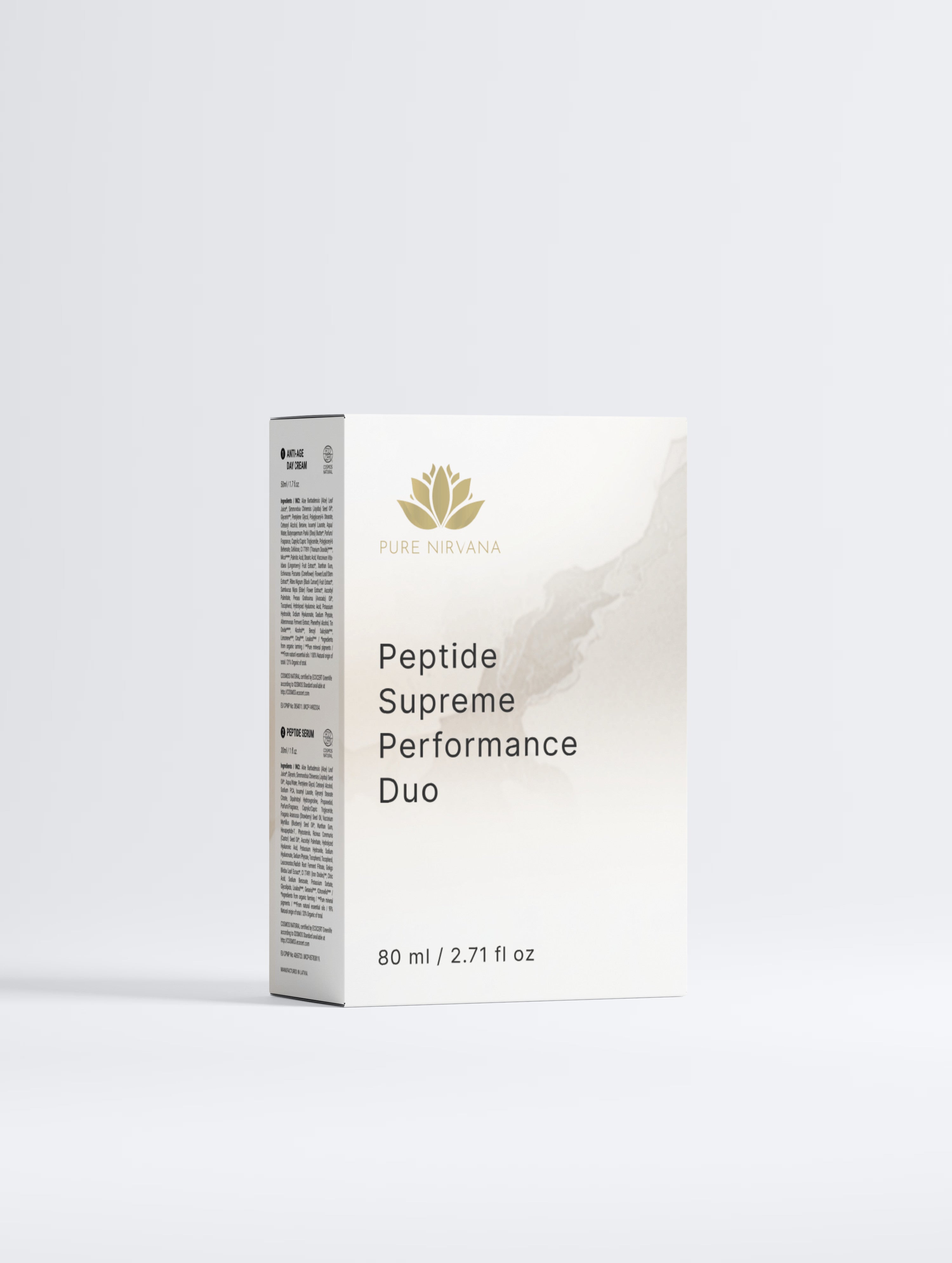
Start with one product that fits the gap in your routine, a hydrating serum if you are dry, a moisturiser if you need barrier support, and use it consistently for at least eight to twelve weeks before judging it. Our Peptide Supreme Performance Duo (£49.99) pairs a serum with a day cream for a simple two-step routine. If you already use a retinoid, add peptides in the morning and keep the retinoid at night to avoid overloading skin. If budget is tight, a single peptide moisturiser plus sunscreen will take you most of the way; there is no need to buy a full peptide range at once.
Watch out: buying several peptide products at once makes it impossible to tell which one is working and which is irritating your skin.
Get Pure Nirvana designs its peptide formulas for people who want a considered, consistent routine rather than a crowded shelf. Explore the Peptide Royale Ritual Collection (£84.99) to find a routine that suits your skin.
Frequently Asked Questions
Are peptide skincare products worth the money?
They can be, but expectations matter. Peptides are a reasonable addition to a routine for firmness and the look of fine lines, and the evidence supports modest rather than dramatic changes. Compare the cost per millilitre of a product with its active concentration and the alternatives you already use, such as a retinoid or a basic moisturiser. A serum like Peptide Royale Serum at £46.99 is a considered purchase, while a simpler peptide cream may give you similar benefits for less.
Do peptides in skincare actually work?
Some peptides have been studied for effects on collagen production and skin firmness, but the strength of evidence varies by peptide type and by how the product is formulated. Many studies are small, short or funded by manufacturers, so claims of dramatic results should be treated cautiously. Peptides are best understood as one supportive ingredient within a broader routine that includes sun protection, moisturising and a proven active where needed.
Can you use peptides with vitamin C?
Yes, for most people. Peptides and vitamin C can be layered in the same routine, though some people find that a stable vitamin C serum irritates sensitive skin when combined with other actives. Apply the vitamin C first on clean skin, let it absorb, then add a peptide serum or moisturiser. If your skin reacts, use them at different times of day, with vitamin C in the morning and peptides in the evening.
How long does peptide skincare take to work?
Most products need consistent use over several weeks before you notice changes, and visible improvements in firmness or fine lines often take at least eight to twelve weeks. Improvements in hydration and texture can appear sooner. Judge a product after a full, consistent trial rather than a few days, and stop if you experience irritation. Results are typically modest and cumulative rather than immediate.
Can peptide skincare cause side effects?
Peptide products are generally well tolerated, but any active can cause redness, stinging or dryness, particularly on sensitive or reactive skin. Patch test a new serum on a small area for several days before using it across the face. Check the full ingredient list for fragrances or essential oils if you have a history of irritation, and speak to a pharmacist or GP if a reaction persists.
How should you use a peptide serum or cream?
Apply a peptide serum to clean, slightly damp skin after toning and before heavier products, then follow with a moisturiser to lock in hydration. Use a few drops for the face and neck, morning or evening. Peptide Ageless Radiance Cream at £31.99 works for both morning and evening use as a single step, which suits a busy routine. Consistency matters more than the number of steps.


Leave a comment
This site is protected by hCaptcha and the hCaptcha Privacy Policy and Terms of Service apply.