Last Updated: November 14, 2026
Quick Summary
The luxury skincare brands that pass the ethical sourcing test can trace a named ingredient to a specific farm, cooperative or supplier, publish written supplier standards and back the claim with independent certification rather than self-declared badges. Judge them on traceability, certification and disclosure, not on price.
- Traceability means the brand knows the origin of a named ingredient, not just the country.
- COSMOS sets criteria for organic and natural content and environmental practice in production.
- A fair trade mark covers one raw material's chain, not the whole formula.
- Verification takes about ten minutes per brand using a certifier's public register.
- A premium price is not evidence of an ethical supply chain.
Table of Contents
- What Ethical Sourcing Actually Means in Luxury Skincare
- The Five-Point Framework for Judging Ethical Skincare Brands
- Ethical Beauty Certifications That Carry Real Weight
- Responsibly Sourced Skincare Ingredients: What to Look For
- Are Fair Trade Beauty Brands Held to a Higher Standard?
- Get Pure Nirvana: Ethical Sourcing Behind the Formula
- Where Luxury Skincare Brands Fall Short on Ethics
- How to Verify a Brand's Ethical Claims Before You Buy
- Find Your Ritual: Building an Ethical Routine That Delivers
- Frequently Asked Questions
What Ethical Sourcing Actually Means in Luxury Skincare
Ethical sourcing in luxury skincare means a brand can trace its ingredients back to the farm, cooperative or supplier that grew or produced them, and can show that the people and ecosystems along that chain were treated fairly. It is a supply chain claim before it is a marketing claim.
The distinction matters because luxury skincare brands charge a premium on the promise of rarity. Rare argan, cold-pressed berry extracts, hand-harvested botanicals: these cost more because the raw material costs more. Sourcing ethics is the question of whether that extra money reaches the grower or stops at the distributor.
Three things separate real ethical sourcing from a slogan:
- Traceability: the brand knows the origin of a named ingredient, not just the country.
- Supplier standards: written expectations on labour, land use and chemical inputs.
- Independent verification: a certification body or auditor confirms the claim, rather than the brand confirming itself.
Most premium ranges publish the first and skip the third. That gap is where greenwashing lives.
The Five-Point Framework for Judging Ethical Skincare Brands
- Can the brand name the origin of its hero ingredient? Not "sustainably sourced argan" but the region and the supplier relationship.
- Is there a certification with a public standard behind it? COSMOS, for example, sets criteria for organic and natural content and for environmental practice in production.
- Does the brand disclose what is not in the formula? Full ingredient lists, fragrance disclosure, and clear allergen information.
- Are worker and community terms stated? Fair purchasing commitments, cooperative partnerships, or published supplier codes.
- Is the packaging claim specific? "Recyclable" means something checkable. "Eco-friendly" does not.
Our Argan Nectar Facial Oil (£46.99) is built on eleven organic certified oils and extracts, and its full ingredients are listed so a shopper can check the claim.
Ethical Beauty Certifications That Carry Real Weight
Certifications are the closest thing the industry has to a referee, but only if you know what each one actually audits. The ones worth your attention publish their criteria, use independent auditors and keep a public register you can search. The ones to treat with caution are self-declared badges with no standard behind them.
COSMOS is the standard most relevant to natural and organic cosmetics in Europe, and it is run by a group of certifying bodies rather than a single brand-friendly scheme. It has two tiers, COSMOS Organic and COSMOS Natural, and both extend beyond ingredient content to how raw materials are processed and how the product is manufactured. A COSMOS seal tells you a product met a written standard checked by an independent body. What it does not tell you is that every ingredient is organic, or that workers in the supply chain were paid a living wage; those are separate questions. When you see a COSMOS mark, check the certifier's public register for the specific product and licence number rather than trusting the logo alone.
Cruelty-free certification matters separately from vegan status, and the two are routinely conflated. A vegan formula contains no animal-derived ingredients; a cruelty-free claim concerns testing. A product can be vegan and still be made by a company that tests elsewhere in its portfolio. Look for a recognised cruelty-free scheme with a licence you can verify against the scheme's own database, not a bunny icon a designer drew. The scope of the licence matters too: it may cover the finished product, the brand, or the whole company, and those are different promises.
Fair trade and fair purchasing marks apply to specific ingredients rather than whole products, and that is normal. A fair trade mark on one raw material is a narrower but more honest claim than a generic "ethically made" badge. The standard behind it typically covers minimum pricing, working conditions and a community premium, verified by an independent body. The limitation is scope: a fair trade mark on shea butter says nothing about the argan oil in the same bottle.
Organic certification for cosmetics is a separate layer again. In the UK, organic claims on cosmetics are not regulated in the same way as organic food, so the credibility of the claim depends on the certifier. A recognised organic standard will specify the percentage of organic ingredients and the rules on processing; a brand that says "organic" without naming a certifier is making a marketing statement, not a verifiable one.
A common pattern is for a brand to hold one certification on one hero product and imply the whole range shares that status. The fix is to check the certificate against the product you are actually buying.
For a fuller picture of brands that pair certification with luxury formulation, our guide to cruelty free luxury body care brands covers the category in more depth.
Responsibly Sourced Skincare Ingredients: What to Look For
Responsibly sourced skincare ingredients are raw materials whose origin, harvesting method and trade terms a brand can document. The ingredient name on the label tells you what is in the bottle; the sourcing story tells you how it got there.
Start with the ingredients that carry the most sourcing risk. Botanicals harvested from wild or smallholder supply chains, oils pressed from crops grown in sensitive regions, and minerals mined for exfoliants all have complex chains. A brand that can speak specifically about those is usually serious about the rest.
Then check the ingredients that are easy to verify. Organic certification on an oil is a paper trail. Cold-pressed status is a process claim. Both are checkable in a way that "botanical blend" is not.
Our Prebiotic Bloom Jelly Elixir (£42.99) uses lactobacillus ferment lysate, sodium PCA and hyaluronic acid.
European Commission guidance on cosmetic product claims sets out the common criteria that marketing claims about cosmetics must be substantiated. It is a useful reference point when a label makes a bold ethical statement.
Are Fair Trade Beauty Brands Held to a Higher Standard?
Not automatically, and that is the uncomfortable truth. Fair trade beauty brands are held to a higher standard only when the certification behind the claim is rigorous and the brand applies it to the ingredients that matter. The phrase "fair trade beauty" is not protected in the way "organic" is regulated for food, so a brand can use the term loosely. A recognised fair trade certification, by contrast, involves standards on pricing, working conditions and community investment, verified by an independent body.
Where the standard genuinely bites is in smallholder supply chains, and the mechanism is worth understanding because it is what separates a real commitment from a slogan. A typical fair trade standard sets a minimum price that acts as a floor when market prices fall, plus a social premium paid on top and controlled by the growers' organisation rather than the buyer. It also sets expectations on working conditions, freedom of association and, in many schemes, a grievance mechanism workers can use without retaliation. When a cooperative of growers is paid a floor price and a premium, the effect on a community is direct and traceable. That is a meaningful difference from a brand that simply buys from a supplier who says the right things.
The limitation is scope, and it is the part most brand pages leave out. A fair trade mark on one raw material covers that ingredient's chain, not the rest of the formula. A brand can hold a fair trade certification on shea butter and source its argan oil, mica or palm derivatives through conventional channels with no equivalent standard. The honest version of the claim names the ingredient, the cooperative and the certifier; the vague version implies the whole product is fair trade when only one input is.
Worker welfare is the area where luxury skincare is weakest on disclosure. Few brands publish living-wage commitments, grievance mechanisms or audit summaries for their supply chains, and fewer still publish the findings when an audit fails. A brand that does publish a supplier code with named labour standards, a modern slavery statement that goes beyond the statutory minimum, and a route for workers to raise concerns is doing more than most. A brand that publishes only a certification logo is asking you to take the rest on trust.
Our advice: treat fair trade as an ingredient-level claim, not a brand-level one. Ask which ingredient, which cooperative, which certifier, and what the standard requires on wages and grievance. A brand that can answer is a brand worth the premium. A brand that cannot answer is selling the word, not the standard.
Get Pure Nirvana: Ethical Sourcing Behind the Formula
Our approach starts with the formula and works backwards to the supplier. Our Velvet Calm Scalp Shampoo (£26.99) is COSMOS Natural certified and dermatologically tested, and is suited to sensitive scalps.
If you want to see how those ingredients translate into a daily routine, our moisturizers and facial oils collection is where most people start.
UK Cosmetic, Toiletry and Perfumery Association guidance on cosmetics regulation explains the compliance framework that applies to products sold in the UK market.
Where Luxury Skincare Brands Fall Short on Ethics
The most common failure is not dishonesty. It is vagueness dressed as sophistication. A brand says its ingredients are "ethically harvested" and "responsibly sourced" and never names a supplier, a region or a standard. The language sounds premium and says nothing.
The second failure is selective disclosure. A brand certifies one hero ingredient and implies the whole range shares that status. The third is packaging theatre: a recyclable outer box around a pump and bottle that cannot be separated.
Watch out: a premium price is not evidence of an ethical supply chain. Some of the most expensive ranges in the category publish the least. Price reflects positioning and formulation cost, not auditing.
We have written separately about why luxury skincare fails to deliver results, and the sourcing question is part of that story. A brand that will not show its working on ingredients is usually not showing its working anywhere.
How to Verify a Brand's Ethical Claims Before You Buy
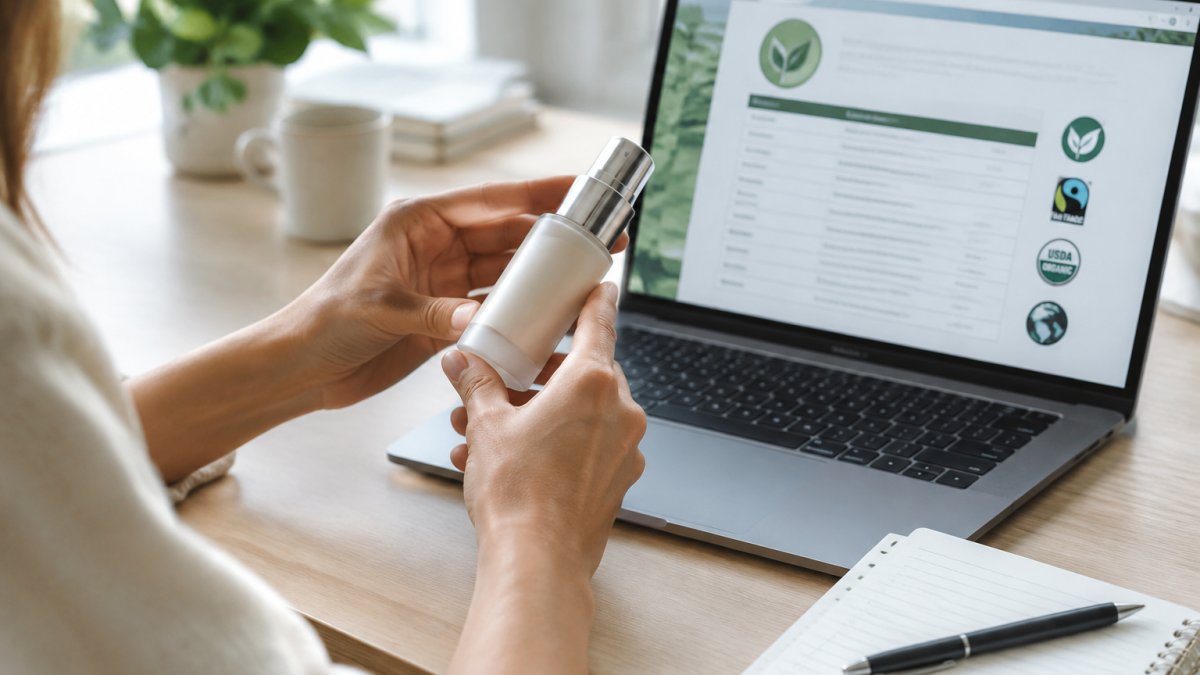
Verification takes about ten minutes per brand, and it is the single most useful habit a luxury skincare shopper can build. Here is the checklist we would use.
- Find the full ingredient list, not the "key ingredients" panel.
- Search the brand site for a certification name, then check that name against the certifier's own public register.
- Look for a named supplier, region or cooperative against the hero ingredient.
- Check whether the cruelty-free claim names a scheme and a licence number.
- Read the packaging claim and ask what specifically is recyclable.
- Look for a published supplier code or modern slavery statement.
- If a claim is unclear, ask the brand directly in writing.
That last step is the one most shoppers skip. A brand confident in its sourcing will answer a direct question. If you want to test ours, you can contact us and ask which certifier signed off a specific product.
For the ingredient-reading side of this, our guide to how to read skincare ingredient labels walks through the order of a list and what the first five ingredients actually tell you.
Find Your Ritual: Building an Ethical Routine That Delivers
An ethical routine only earns its place if it works. The brands worth buying are the ones where sourcing standards and formulation quality point the same way.
Here is how we would build a simple, defensible routine:
| Step | Product | Price | What it does |
|---|---|---|---|
| Cleanse | Aqua Silk Shampoo | £21.99 | Gentle wash with aloe juice and sodium PCA |
| Treat | Exosome Renewal Elixir | £42.99 | Niacinamide, ferments and hyaluronic acid |
| Nourish | Argan Nectar Facial Oil | £46.99 | Eleven organic certified oils for dry, mature skin |
| Body | Warm Spice Body Ritual Trio | £94.99 | COSMOS certified cleanse, scrub and oil |
Price
Two steps in the morning, two at night. That is enough. The question worth asking of any premium product is not whether it sounds ethical but whether you can check the claim and see the result.
The hard part of buying luxury skincare is not finding a beautiful bottle. It is finding a brand willing to show you the supply chain behind it. Get Pure Nirvana publishes full ingredient lists, names its active ingredients and states which certifications apply to each formula, across a range built on peptides, vitamin C and ceramides and shipped to the UK, US and EU. Get started with Get Pure Nirvana and build a ritual you can actually verify.
Frequently Asked Questions
What does ethical sourcing mean in skincare?
Ethical sourcing in skincare means a brand can show how its ingredients were grown, harvested and traded, and that workers in that chain were treated and paid fairly. In practice it covers supplier standards, traceability, environmental impact and labour conditions. A brand claiming ethical sourcing should be able to name its suppliers or at least the certification scheme its ingredients are audited against. Without that evidence, the claim is marketing rather than a verifiable commitment.
What ethical beauty certifications should I look for?
Look for COSMOS Organic or COSMOS Natural, which audit both ingredient origin and manufacturing against recognised European standards, and Leaping Bunny for cruelty-free supply chains. Fair trade marks such as Fairtrade International or WFTO membership cover labour and pricing for specific ingredients. B Corp certification assesses a brand's wider social and environmental performance. Check the certifier's own database rather than a logo on a product page, because certification is verifiable and a claim alone is not.
How can I check whether a skincare brand sources ingredients ethically?
Start with the certification body's public directory to confirm any badge is current. Then read the brand's sourcing page: vague phrases like naturally derived tell you nothing, while named suppliers, country of origin and audit schemes do. Look for a published ingredient list with sourcing notes, and check whether the brand mentions worker welfare rather than only environmental targets. If a brand cannot answer a direct question about where an active ingredient comes from, treat its ethical positioning as unproven.
Is luxury skincare more sustainable than affordable skincare?
Price does not guarantee ethics. A high price can fund better ingredients, independent certification and audited supply chains, but it can equally pay for packaging and marketing. The deciding factors are the same at any price point: certified formulations, recyclable packaging, traceable responsibly sourced skincare ingredients and transparent labour standards. Judge a luxury skincare brand by its published evidence, not its price tag. Some affordable brands hold stronger certifications than premium ones.
Are organic skincare brands always ethically sourced?
No. Organic certification confirms how an ingredient was grown, not how the people who harvested it were treated or paid. A brand can hold organic certification and still lack fair trade auditing or worker welfare policies. To assess ethical skincare brands properly, check organic and ethical credentials separately. Ideally you want both: certified organic ingredients plus evidence of responsible sourcing and labour standards across the supply chain.


Leave a comment
This site is protected by hCaptcha and the hCaptcha Privacy Policy and Terms of Service apply.