

Last Updated: November 9, 2026
Quick Summary
Luxury skincare fails to deliver results because cost buys packaging, scent and marketing rather than a formula that suits your skin. Weak formulation, poor absorption, routine mistakes and unrealistic timelines usually explain why expensive products let you down. Pay for formulation, not for the box.
- Many luxury products lean on rare-sounding extracts while proven active ingredients sit far down the ingredient list.
- Large molecules often sit on the surface and do nothing, so delivery mechanisms decide whether a serum helps.
- Daily acids and retinoids without rest days wear down the skin barrier, causing redness and irritation.
- Most actives need weeks, not days, to show visible change, so expecting overnight results causes disappointment.
- During a routine audit, stop everything except a gentle cleanser, plain moisturiser and broad-spectrum SPF 30 or higher for two weeks.
Table of Contents
- Why Luxury Skincare Fails to Deliver Results
- Why Skincare Products Are Not Working: Formulation and Ingredient Quality
- The Absorption Problem: Delivery Mechanisms and Skin Penetration
- Skincare Routine Mistakes That Undermine Expensive Products
- Luxury Skincare vs Affordable Skincare: Price Versus Performance
- How Long Does Skincare Take to Work? Realistic Timelines by Ingredient
- A Step-by-Step Routine Audit to Find What Is Failing
- Find Your Ritual with Get Pure Nirvana
- Frequently Asked Questions
Why Luxury Skincare Fails to Deliver Results
A high price tag is no promise of results. If your luxury products have let you down, see what is the best luxury skincare for reactive skin. That is the uncomfortable truth behind why luxury skincare fails to deliver results so often: cost buys packaging, scent and marketing, not necessarily a formula that suits your skin. People often spend heavily, then wonder why their skin looks the same months later.
The reason is rarely one thing. It is usually a mix of weak formulation, poor absorption, routine mistakes and unrealistic timelines.
Below, we break down the seven real reasons expensive products let you down, and how to fix each one.
Why Skincare Products Are Not Working: Formulation and Ingredient Quality
Formulation is how ingredients are combined, stabilised and delivered. A good formula keeps actives stable and at useful concentrations. A poor one looks impressive on the label but does little on your skin.
Many luxury products lean on rare-sounding extracts while the proven active ingredients sit far down the ingredient list. That usually means low ingredient concentration. Others use unstable vitamin C that oxidises before it reaches you.
Ingredient stability matters as much as strength. Light, air and heat degrade actives fast. A beautifully packaged serum can lose potency long before you finish the bottle.
What most guides miss is that formulation quality decides whether an ingredient works at all. If you want to see what well-made formulas look like in practice, these well-formulated peptide creams show the difference clearly.
The Absorption Problem: Delivery Mechanisms and Skin Penetration
Your skin is built to keep things out. That is its job. So a serum only helps if it can cross the outer layer.
This is where delivery mechanisms matter. Skin penetration depends on molecule size, the base the ingredient sits in, and how well it passes the skin barrier. Large molecules often sit on the surface and do nothing.
Absorption also depends on order and timing. Apply a heavy oil first and your active serum may never get through. Apply on damp skin and light layers, and penetration improves.
A common mistake is layering thick products too early. The active never reaches the deeper layers where skin renewal happens.
Skincare Routine Mistakes That Undermine Expensive Products
Most disappointing results come from how products are used, not what they cost. These are the routine mistakes we see most:
- Overuse of harsh ingredients: daily acids and retinoids without rest days wear down the skin barrier.
- Layering mistakes: actives applied in the wrong order cancel each other out.
- Too many products at once: this makes it impossible to know what works.
- Skipping SPF: sun damage undoes most repair work.
- Inconsistency: stopping and starting resets your progress.
Barrier damage shows up as redness, irritation, breakouts and sensitivity. When the barrier is compromised, even gentle products sting. That is your cue to strip back to a simple cleanser, moisturiser and SPF for two weeks.
Product compatibility matters too. Some actives clash and cause irritation when combined. Fewer, better-chosen steps beat a crowded shelf.
Luxury Skincare vs Affordable Skincare: Price Versus Performance
Price and performance are not the same thing. A costly cream and a modest one can share identical core ingredients. What you often pay extra for is texture, scent, packaging and brand name.
That does not mean all affordable products win. Cheap formulas can skimp on ingredient concentration and use weaker delivery mechanisms. The real question is price versus results, not price alone.
Drugstore skincare can perform well when the ingredient list is solid. Luxury can perform well when the formulation is genuinely considered. The label price tells you little.
Our view is simple: pay for formulation, not for the box. A complete, well-priced peptide routine like the Peptide Royale Ritual Collection shows how value and quality can sit together.

How Long Does Skincare Take to Work? Realistic Timelines by Ingredient
Skincare takes time to work. Most actives need weeks, not days, to show visible change, and expecting overnight results is one of the biggest causes of disappointment. The table below gives realistic ranges, but treat them as guidance rather than guarantees: individual results depend on concentration, formulation, delivery, your barrier health and how consistently you use the product.
| Ingredient | First changes | Full results | Best for | Evidence quality |
|---|---|---|---|---|
| Hyaluronic acid | 1-2 weeks | 4 weeks | Hydration, plumpness | Well supported for short-term hydration; less so for long-term firmness |
| Vitamin C | 4-6 weeks | 12 weeks | Brightness, dark spots | Well supported at stabilised, adequately concentrated formulas |
| Peptides | 4-8 weeks | 12 weeks | Firmness, fine lines | Mixed; depends heavily on peptide type and delivery |
| Retinoids | 6-8 weeks | 16-24 weeks | Texture, renewal | Strongly supported, with irritation risk during adjustment |
| Ceramides | 1-2 weeks | 4-6 weeks | Barrier repair | Well supported for barrier support and moisture loss |
First changes
Skin-cell turnover slows with age, so time to results stretches. Routine consistency matters more than any single product. A well-formulated product used daily will usually outperform a stronger product used sporadically.
How to measure results objectively. Do not rely on memory or on how your skin feels on a given morning. Take baseline photographs in consistent lighting, same window, same time of day, no direct sun, and repeat them weekly. Track specific symptoms (redness, flaking, breakout count, tightness) on a simple scale. Review at four, eight and twelve weeks. This is how you tell slow progress from no progress, and it stops you abandoning a product that is working simply because change is gradual.
When to seek professional care. If you have persistent irritation, cystic acne, rapidly changing pigmentation, or a reaction that does not settle after two weeks of simplified routine, stop self-troubleshooting and seek advice from a qualified clinician such as a GP or a registered dermatologist. Persistent concerns are not a formulation problem you can solve by buying differently.
Watch out: judging a product before its full timeline, or judging it only by feel, leads to abandoning effective products and keeping ineffective ones.
If you want to test an ingredient's timeline before committing, a low-cost peptide serum sample lets you try before you invest.

A Step-by-Step Routine Audit to Find What Is Failing
A routine audit is a diagnostic sequence, not a spring clean. The aim is to isolate the failing step, change one variable at a time, and track what happens. Work through the stages below in order and write down what you find at each one.
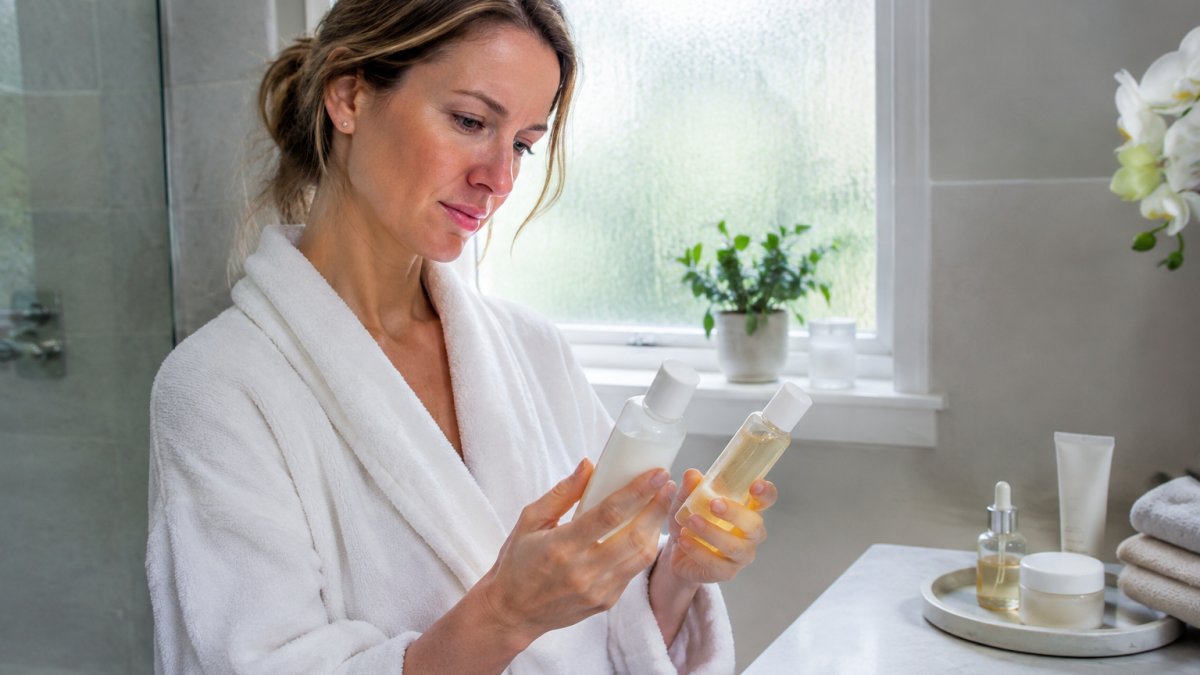
Stage 1, Build a baseline. List every product you use, morning and night, with the date you opened it and where it is stored. Take three baseline photographs: front, left cheek, right cheek, in the same spot, same light, same time of day. Note any current symptoms, tightness, redness, flaking, breakouts, with a simple severity score out of five. Without a baseline you cannot tell slow progress from no progress.
Stage 2, Pause and simplify. For two weeks, stop everything except a gentle cleanser, a plain moisturiser and a broad-spectrum SPF 30 or higher. This is the reset. If redness, stinging or breakouts settle during the reset, the cause was likely irritation or product overload rather than a missing active. If nothing changes, the problem is more likely formulation, delivery or timeline.
Stage 3, Reintroduce one product at a time. Add back one product every two weeks, starting with the one you believe does the most work. Keep everything else constant. If a reaction appears within 48 hours, stop that product and note it. If no change appears after its realistic timeline (see the ingredient table above), it is not earning its place.
Stage 4, Check the mechanics. Confirm the order is thinnest to thickest, that actives go on clean, damp skin where appropriate, and that you are not layering a heavy oil or occlusive before a serum. Check storage: heat, direct sunlight and bathroom steam degrade vitamin C, retinoids and peptides faster than the label suggests. Check expiry dates and whether a product has changed colour or smell.
Stage 5, Count and space your actives. More than two strong actives at once is usually too many. Alternate rather than stack, for example, a retinoid at night and vitamin C in the morning, with a rest day if the barrier feels compromised. If you use acids and retinoids, do not use them on the same evening.
Stage 6, Review at fixed intervals. Review at four weeks, eight weeks and twelve weeks against your baseline photographs and symptom scores. Judge only against the realistic timeline for the ingredients involved. A product that shows no measurable change after its full timeline should be dropped, regardless of price.
Watch out: changing several products at once during reintroduction makes it impossible to tell what caused a reaction or a result, and it resets your baseline.
If the audit shows too many failing steps, a simple, complete daily set like the Radiance Veil Daily Ritual replaces the clutter with three reliable products.

Find Your Ritual with Get Pure Nirvana
The fix for disappointing skincare is not spending more. It is choosing better formulas, using them in the right order, and giving them realistic time.
At Get Pure Nirvana, our formulas feature peptides, vitamin C and ceramides, chosen for genuine results rather than label theatre. Our curated lineup invites a calm, mindful ritual, morning and night. Our sample sachets let you try products before you commit.
Find your ritual with Get Pure Nirvana.
If your shelf is full of expensive products that never worked, it is time to change the approach. Get Pure Nirvana offers peptide, vitamin C and ceramide formulas made for visible results, plus low-cost samples so you can try before you invest. Find your ritual and give your skin what it actually needs.
Frequently Asked Questions
Why is my expensive skincare not working?
Expensive skincare often fails because the formulation cannot penetrate the skin barrier, the active ingredients have degraded, or your routine is undermining them. Layering mistakes, overuse of harsh actives, and skipping sunscreen all reduce results. Check that the product suits your skin concern, that you are applying it in the right order, and that you have used it consistently for at least eight to twelve weeks before judging results.
How long does skincare take to work?
Timelines vary by ingredient. Hydration and barrier repair can improve within days to two weeks. Vitamin C and peptides typically show visible changes in four to eight weeks. Retinoids and pigmentation treatments often need twelve weeks or more. Skin-cell turnover slows with age, so mature skin may take longer. Photograph your skin in consistent lighting every two weeks to track real progress rather than relying on memory.
Can luxury skincare be less effective than affordable skincare?
Yes. Price reflects packaging, fragrance, marketing, and brand positioning as much as formulation. An affordable product with a stable, well-formulated active ingredient can outperform a luxury cream with low active concentration or poor delivery. What matters is the ingredient list, concentration, packaging that protects the formula, and whether the product targets your specific skin concern, not the price tag.
How can I tell whether a skincare product is working?
Measure objectively rather than relying on how your skin feels day to day. Take photos in the same lighting every two weeks. Note specific changes in texture, redness, hydration, and breakouts. Track how long you have used the product and whether you introduced it alongside other new items. If nothing changes after twelve weeks of consistent use, the product is not delivering for your skin.



Leave a comment
This site is protected by hCaptcha and the hCaptcha Privacy Policy and Terms of Service apply.